How Do You Keep a Live Bracket Updated When the Venue Has Weak Cell Service?
Gyms with metal roofs and fields an hour from the nearest town are where signal goes to die, and it dies at the busiest moment of your day. Here is the workflow we tell organizers to build before they get there.
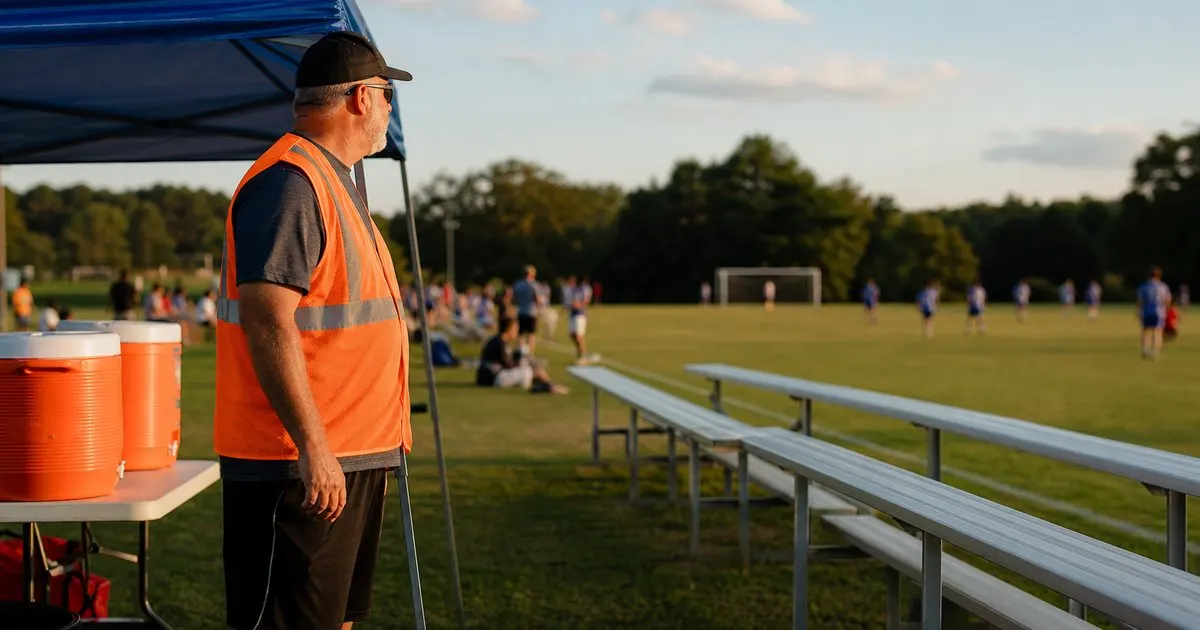
Test the signal at the venue before the day, not during it
Signal at a venue is not a fixed property of the building. It depends on how many people are standing inside it. A gym that loads pages fine during a Tuesday walkthrough can crawl on Saturday morning when several hundred phones are all attached to the same tower, and an outdoor complex that works at the parking lot entrance can drop to nothing at the far field. Metal roofs, concrete block walls, below grade gyms and rural sites far from a tower are the usual suspects. If you can, visit at a comparable hour on a comparable day, and walk the whole site rather than testing from one spot near the door.
Bars on a phone are close to useless as a test. Test the actual action you need: open the bracket, enter a score, and see whether it saves in a couple of seconds. Note the places where it works, because there is almost always one: an upper corner of the bleachers, a window on the north wall, the parking lot. Write those spots into the day plan the same way you write court assignments. If the facility has guest wifi, get the password a week ahead and confirm two things: that it is not a captive portal that logs you out every half hour, and that it does not cap the number of devices per account.
Keep reading: How Do You Seed Teams Fairly in a Single Elimination Tournament Bracket?, What Is the Difference Between Single and Double Elimination Tournament Formats?, Why Do Spectators Prefer a Live Updating Bracket Over a Printed One?. See how LiveBracketr helps you live tournament brackets and score updates.
Build a scoring workflow that survives a bad connection
The single biggest improvement is fewer devices with one clear owner. One person entering results from a laptop or tablet parked at the best connection in the building will keep a bracket more current than six volunteers entering from six phones scattered around the site, because five of those phones are in dead zones and nobody knows which five. Have that person enter in batches at natural breaks, usually as each round completes, and keep the page open instead of reloading it. Ask everyone at the scorer's table to leave photo and video uploads until they are home, since a few clips will happily consume whatever bandwidth is left. Related: How Do You Share a Public Bracket Link So Everyone Can Follow Along?
Plan the fallbacks in advance. A phone on a different carrier used as a hotspot solves more tournament days than any other trick, so if two staff members are on different networks, know which one is the backup before you need it. Bring power banks, because a device hunting for a weak signal drains fast. And set a rule for what happens when a save spins: note the result on paper, move on, and try again in a minute. Tapping submit repeatedly is how you end up with duplicate matches and a bracket that looks wrong to everyone watching. Related: Why Do Spectators Prefer a Live Updating Bracket Over a Printed One?
Keep a paper trail that is the real source of truth
The live bracket is a publishing layer. The official record should be a score slip from each court, signed by a representative from both teams before they leave the playing area. That one habit means a total connectivity failure delays your publishing but never stops your tournament. Assign a runner per two or three courts to collect slips at the end of every round and bring them to the table, and keep them stacked in round order in a single box or folder rather than in four different people's pockets. Related: How Do You Seed Teams Fairly in a Single Elimination Tournament Bracket?
Use one consistent slip layout: court, round, match number, both team names, set or period scores, the winner, the finish time, and two signatures. When the connection comes back, entering a full round takes a few minutes because everything is already in order and nobody has to reconstruct anything from memory. Photograph the stack at the end of the day before you leave the venue. It costs nothing, and it has settled more than one argument that surfaced a week later when someone questioned a result.
Set spectator expectations so the bracket still does its job
Parents accept a known delay far more easily than unexplained silence. Say plainly, in the event packet and on the bracket page itself, that scores are posted at the end of each round rather than the moment a whistle blows. That one sentence stops the refresh loop, stops the questions at your table, and buys your scorekeeper the room to work in batches. Give a rough cadence people can plan around, such as within fifteen minutes of a round finishing, and then hold yourself to it.
Keep one physical fallback at the venue. A whiteboard showing the next round's matchups, courts and start times, updated by the same person who enters the scores, covers the people standing in front of you while the bracket catches up. Put it where lines naturally form, near check-in or the concession table. It also gives you honest data for next year: if the whiteboard was ahead of the live bracket for two full rounds, connectivity is a real line item for that venue, and the fix is usually a hotspot on a second carrier or a request to the facility for a wired connection at the scorer's table. Related: What Is the Fastest Way to Update Scores During a Busy Tournament Day?
- Test real score entry at the venue at a comparably busy hour, not signal bars during a quiet walkthrough.
- One person on the best connection entering results in batches beats several volunteers entering from wherever they happen to stand.
- Signed paper score slips stay the official record, so a dead connection delays publishing without stopping the event.
- Publish an update cadence and keep a whiteboard at the venue; a known delay is far easier to accept than silence.

Julien Jimenez
Julien Jimenez is an independent software builder based in Paris. He designs, ships, and operates focused SaaS products for small businesses and independent professionals. Read the full author page.
Live brackets everyone can follow
Live tournament brackets and score updates. LiveBracketr is built to help you put this into practice.
Create a bracketMore from the LiveBracketr blog

How Do You Seed Teams Fairly in a Single Elimination Tournament Bracket?


Why Do Spectators Prefer a Live Updating Bracket Over a Printed One?
Get the LiveBracketr playbook
Practical guides on tournament brackets, straight to your inbox as we publish them. No spam, unsubscribe any time.