When Should a Tournament Organizer Choose a Swiss System Over a Bracket?
Swiss pairings let a large field play a fixed number of rounds with nobody eliminated. That is a great fit for some events and a logistical headache for others. Here is how to tell which one you are running.
What a Swiss system actually does
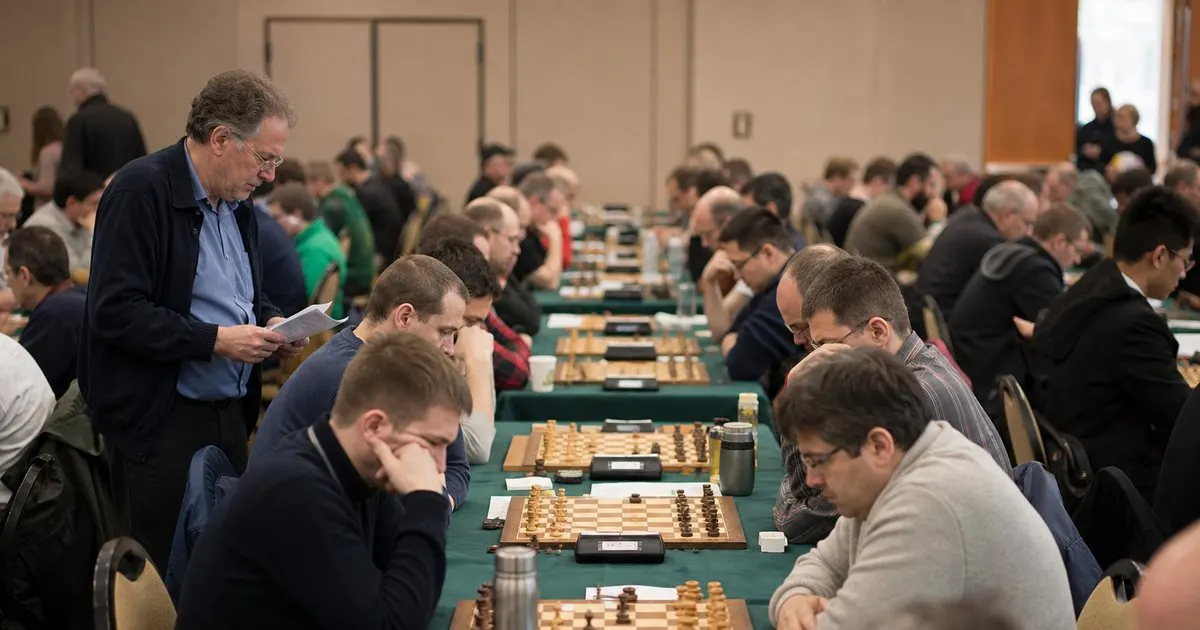
In a Swiss system every team plays every round and nobody is eliminated. The first round is paired by seed (top half against bottom half is the common convention) or at random. Each round after that pairs teams with the same or the closest record: winners play winners, losers play losers, and the middle sorts itself. After a fixed number of rounds the standings are ranked by record with tiebreakers, and either the top finisher wins outright or the top four or eight go into a short playoff bracket to decide the title.
The format comes from chess and is now used in esports, collectible card games, debate, some pickleball and ultimate events, and any competition that needs to sort a large field in a limited number of rounds. The useful property is that a number of rounds roughly equal to the base two logarithm of the field size is enough to produce at most one undefeated team: five rounds for thirty two entries, six for sixty four. Every round beyond that refines the middle of the standings rather than the top.
Keep reading: How Do You Seed Teams Fairly in a Single Elimination Tournament Bracket?, What Is the Difference Between Single and Double Elimination Tournament Formats?, Why Do Spectators Prefer a Live Updating Bracket Over a Printed One?. See how LiveBracketr helps you live tournament brackets and score updates.
When Swiss beats a bracket
Swiss is the right call when you have a large field, a fixed number of rounds, and a promise that everyone plays all of them. Sixty teams on one day who each want five games cannot be served by a single elimination bracket, which gives most of them one or two games; Swiss gives all sixty exactly five. It also wins when ranking the whole field matters, for qualifying spots, ratings, or prize tiers by placement, and when the skill range is wide, because after two rounds teams are playing opponents near their own level and blowouts fade. Related: How Do You Seed Teams Fairly in a Single Elimination Tournament Bracket?
Swiss also handles odd field sizes gracefully. Each round the lowest ranked team without a bye receives a bye scored as a win, and no team gets a second one. And it avoids the classic single elimination complaint where the second best team meets the best in the first round and goes home early. The practical requirement is that games be short enough to pair quickly: matches of roughly twenty to forty five minutes keep the wait between rounds tolerable, while long games turn the pairing gap into dead time that empties the building. Related: What Is the Difference Between Single and Double Elimination Tournament Formats?
When a bracket is the right call
Choose a bracket when spectators need a story. A bracket has a final; a Swiss stage has a standings table, which is fine for participants and dull for a crowd. For events with an audience, a Swiss stage feeding a top four or top eight bracket gives you both. Choose a bracket when games are long, because a ninety minute soccer match makes a five round Swiss into a two day event, and when results arrive unevenly, since the next Swiss round cannot be paired until every game in the current round has finished and one slow match holds the entire field. Related: Why Do Spectators Prefer a Live Updating Bracket Over a Printed One?
Venue layout matters as well. A Swiss event needs a central pairing station and a pause between rounds while pairings are computed and posted; teams then have to find their new court. With a bracket the next matchup is known in advance, so teams can walk to the right court without an announcement. If your venue is spread across several fields or buildings, a bracket is simply easier to run, and a paper or live bracket on the wall does most of the communication for you.
Running Swiss without losing the room
The pairing rules are simple to state and tedious to apply: pair within score groups, avoid rematches, alternate side or home and away where relevant, and float the lowest player of an odd score group down to the next group. Doing this by hand is workable for sixteen entries and miserable for sixty four. Use software that computes pairings, post them on a live page and on paper at the same moment, and announce a fixed start time for each round that you actually enforce. A team that is late for a round forfeits it; without that rule the round start drifts later every time.
Swiss standings need tiebreakers because many teams finish with the same record. The usual ones are the combined record of a team's opponents (strength of schedule), head to head where applicable, and cumulative score. Publish the order before round one. Consider ending with a small playoff bracket for the top four so the champion is decided in a game rather than by a tiebreak column, and say so in the format description so teams know what they are playing toward from the first round. Related: When Should a Tournament Use Pool Play Before the Elimination Bracket Begins?
- Swiss pairs teams with similar records each round and eliminates nobody, so every team plays the same fixed number of games.
- Choose Swiss for large fields, short games, and events where ranking the entire field matters more than a dramatic final.
- Choose a bracket when games are long, the venue is spread out, or spectators expect a final.
- A Swiss stage feeding a small playoff bracket gives you full participation and a real championship game.

Julien Jimenez
Julien Jimenez is an independent software builder based in Paris. He designs, ships, and operates focused SaaS products for small businesses and independent professionals. Read the full author page.
Live brackets everyone can follow
Live tournament brackets and score updates. LiveBracketr is built to help you put this into practice.
Create a bracketMore from the LiveBracketr blog

How Do You Seed Teams Fairly in a Single Elimination Tournament Bracket?


Why Do Spectators Prefer a Live Updating Bracket Over a Printed One?
Get the LiveBracketr playbook
Practical guides on tournament brackets, straight to your inbox as we publish them. No spam, unsubscribe any time.