What Is the Best Way to Schedule Courts When Several Brackets Run at Once?
Running three divisions on four courts is mostly a slot counting problem. Here is how to build a court grid that keeps games moving, gives referees a break, and survives the first delay.
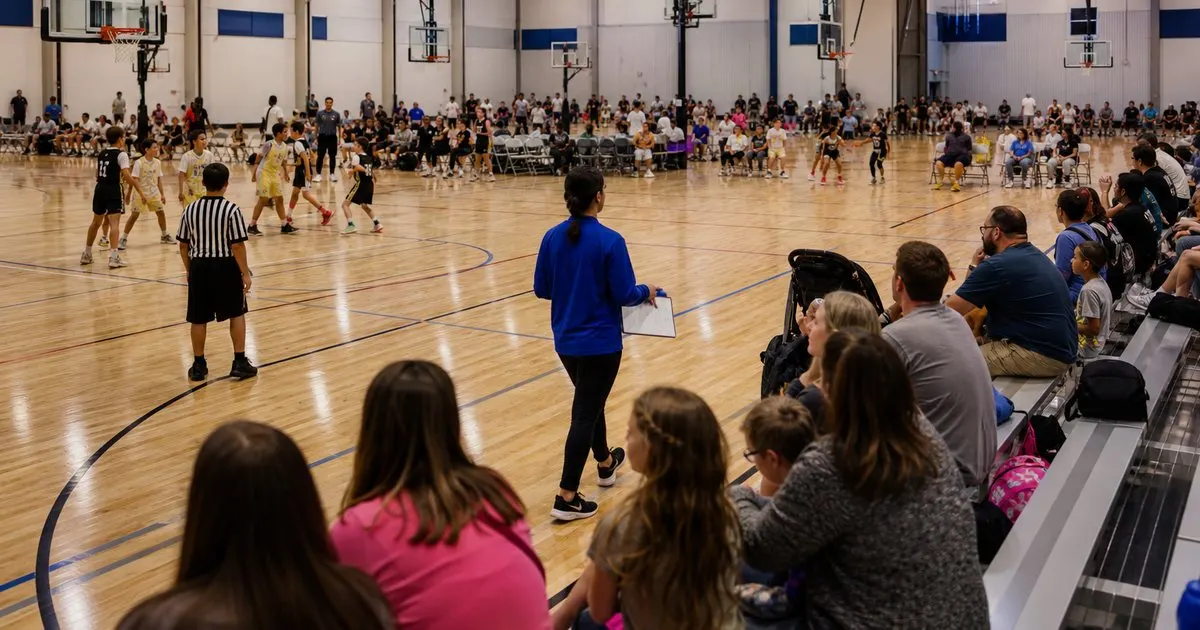
Start with slots, not brackets
Before you draw a single bracket, count the game slots you actually have: courts multiplied by usable hours, divided by slot length, where slot length is the full game plus warmup plus changeover. Four courts over ten hours at fifty minute slots gives you forty eight slots. Then count the games each format needs. A single elimination bracket of N teams needs N minus 1 games, double elimination needs roughly twice that, and a four team pool needs six. Add the numbers across every division. If required games exceed available slots by more than a couple, cut something before you publish: shorten the game, drop a consolation round, or open the doors earlier. Related: How Do You Seed Teams Fairly in a Single Elimination Tournament Bracket?
Build slack into the grid on purpose. Reserve one or two empty slots per court spread across the day as float. Games run long, an injury stops play for ten minutes, a double elimination grand final needs a bracket reset game, and a team arrives late. Without float, one delay at 10 a.m. cascades through every division until the finals are pushed past the venue closing time. Float slots also give you room to recover when a court frees up early and you want to pull a game forward. Related: What Is the Difference Between Single and Double Elimination Tournament Formats?
Keep reading: How Do You Seed Teams Fairly in a Single Elimination Tournament Bracket?, What Is the Difference Between Single and Double Elimination Tournament Formats?, Why Do Spectators Prefer a Live Updating Bracket Over a Printed One?. See how LiveBracketr helps you live tournament brackets and score updates.
Assign divisions to courts, then interleave the rounds
The most robust pattern is to give each division a home court (or pair of courts) for pool play. Teams, families, and referees learn where their division lives, and the director can stand in one place to watch a division's phase finish. When a division has more games than its home court can handle, borrow slots from a division that is in a lull (between pool play and bracket, for example), not from a division in the same phase. Scattering one division across every court forces the director to be everywhere and produces teams wandering the building looking for their game. Related: How Should Organizers Handle Byes When a Bracket Is Not a Power of Two?
Interleave bracket rounds so dependent games are not stacked on one court. The second round cannot start until both feeder games are done; if those feeders run back to back on the same court, the second round waits a full slot for no reason. Put feeder games in the same slot on parallel courts, and place their winner game one or two slots later. This also equalizes rest between the two winners, which matters for fairness and for your rest rule. When courts are limited and feeders must be sequential, slot a game from another division between the second feeder and the next round.
Referees, scorekeepers, and the human constraints
Officials are frequently the real bottleneck. Count crews, not courts: four courts with three referee crews is a three court venue. Build the referee rotation into the grid so a crew works two games and sits one, and stagger their lunches so at least the minimum number of crews is always available. Scorekeepers at the table need the same treatment; a scorekeeper on the sixth straight game makes more reporting mistakes than one on the second, and those mistakes become disputes later.
Courts are not interchangeable. The court nearest the entrance and the concession stand draws the most spectators, so schedule finals there. The court with the worst lighting, the shortest run off, or the dead spot in the floor gets early pool games between teams that are less likely to complain. Reserve a warmup area that is not a live court so the next teams are not stretching on the baseline while the previous game finishes, which is a reliable way to stretch every changeover by five minutes. Related: Why Do Spectators Prefer a Live Updating Bracket Over a Printed One?
Keep the grid alive during the day
A printed grid is obsolete by the second slot. Someone must own the master schedule and adjust court assignments as games finish early or late. The pattern that works is next available court: when a court frees up early, pull the next game whose teams are both present and rested, from any division, and announce it. This fills gaps and recovers time, but it only works if teams have been told in advance that they must be at the venue and ready well before their listed time, and if the rest rule is checked before the game is moved.
Communicate court changes through every channel at once and make sure they agree: the live bracket page, the PA announcement, and the whiteboard at the director's table. This is where a live bracket tool earns its keep. In LiveBracketr, each match carries a court and a time, so a team looking at the bracket on a phone sees where to go, and a court change appears on every phone within moments. Keep the whiteboard anyway for people without a signal, and walk the sideline of the affected court to make sure both teams heard.
- Count available game slots against the games every bracket needs before you promise a schedule to anyone.
- Give each division a home court for pool play and borrow slots only from divisions that are in a lull.
- Schedule feeder games in the same slot on parallel courts so the next round never waits on a single court.
- Count referee crews as your real capacity and build their rest and lunches into the grid.

Julien Jimenez
Julien Jimenez is an independent software builder based in Paris. He designs, ships, and operates focused SaaS products for small businesses and independent professionals. Read the full author page.
Live brackets everyone can follow
Live tournament brackets and score updates. LiveBracketr is built to help you put this into practice.
Create a bracketMore from the LiveBracketr blog
How Do You Seed Teams Fairly in a Single Elimination Tournament Bracket?


Why Do Spectators Prefer a Live Updating Bracket Over a Printed One?
Get the LiveBracketr playbook
Practical guides on tournament brackets, straight to your inbox as we publish them. No spam, unsubscribe any time.