What Should an Organizer Do When Weather Delays Push a Bracket Behind Schedule?
Lightning, rain, and heat delays are a matter of when, not if, for outdoor events. Here is a decision ladder for compressing a bracket without losing the field or the trust of the teams.
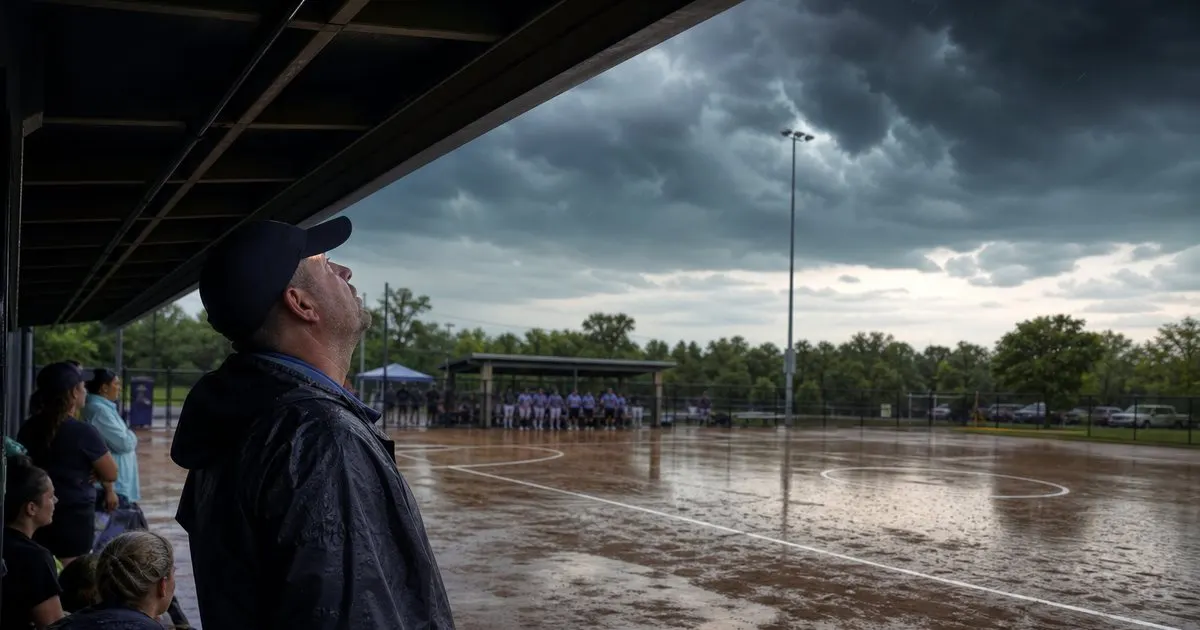
Decide the delay rules before the season
Lightning policy is the one you cannot improvise. Most facilities and sanctioning bodies clear the fields when lightning is detected within a set distance and wait a fixed period after the last strike, commonly around thirty minutes, before resuming. Heat policy uses a temperature or heat index threshold with mandatory breaks. Rain policy leaves playability of the field to the facility, not to coaches. Print which policy applies, name the one person who makes the call, and say how teams will be notified. When a single named person applies a written rule, the arguments end before they start.
Decide your cut points in advance as well: the time of day at which you drop the consolation bracket, the time at which games shorten, and the time at which remaining rounds are canceled and placings are declared from standings. Write these as a ladder in the packet. The hardest decisions of a weather day are the ones you make while wet, tired, and surrounded by coaches asking the same question, and a ladder written on a calm Tuesday removes most of them.
Keep reading: How Do You Seed Teams Fairly in a Single Elimination Tournament Bracket?, What Is the Difference Between Single and Double Elimination Tournament Formats?, Why Do Spectators Prefer a Live Updating Bracket Over a Printed One?. See how LiveBracketr helps you live tournament brackets and score updates.
The compression ladder
Take the smallest step that fits the remaining daylight or venue window. Step one: absorb the delay with float slots and faster changeovers (teams ready on the sideline, no on field warmup). Step two: shorten games with shorter halves, sets to fewer points, or a time limit where the score stands at the horn. Step three: drop the lowest value games, consolation rounds first, then the third place game, then convert any remaining pool games to a bracket seeded from current standings. Step four: reduce rounds by seeding out the lower half of the field using pool results. Step five: end the event with placings by standings. Related: How Do You Seed Teams Fairly in a Single Elimination Tournament Bracket?
Recompute the schedule rather than shifting it. Moving every game back ninety minutes pushes the final past sunset and ignores every other change you just made. Recomputing means re slotting from the current time with the shortened formats, adding any court that is now usable (a drier field, an indoor backup), and checking the rest rule at its published emergency minimum. Do the recompute once, carefully, rather than three times in a hurry; each republished schedule costs you credibility with the teams trying to follow it. Related: What Is the Best Way to Schedule Courts When Several Brackets Run at Once?
Communication during the delay
The first message should go out within minutes of the stoppage and say four things: what happened, that play is stopped, where teams should shelter, and the time of the next update. Then meet that time even if the update is that you are still waiting. Post the same message on the live bracket page, over the PA, and in a text or group message to coaches, and make sure the three versions agree. Teams that are given a time for the next update stay; teams that get silence pack the car and leave. Related: Why Do Spectators Prefer a Live Updating Bracket Over a Printed One?
When you restart, publish the new schedule as a whole with a short note on what changed (games shortened, consolation dropped, courts reassigned), and post it exactly where the old one was. On a live bracket, updating match times in place means the version a parent screenshotted an hour earlier is obviously stale when they refresh; on paper, physically remove the old sheet so nobody reads it by mistake. Then walk the sidelines and dugouts, because someone always missed the message and they are usually the team you need on the field first.
After the event
If placings were declared from standings rather than played out, say so on the results page and in the recap. Naming co champions is an accepted outcome; deciding a title by coin flip is not unless the rules said so in advance. Handle refunds according to what you published. A partial credit toward the next event is a common compromise when many games were lost, but improvising a refund policy on the spot while teams are loading cars produces promises you cannot keep.
Write down what happened while it is fresh: which cut point you reached, how long each step took to communicate, which teams left and when, and which message channel actually reached people. That log becomes next year's ladder, with better times on it. Weather is the most predictable unpredictable thing in outdoor tournament management, and the organizers who treat it as a checklist rather than an emergency are the ones whose fields are full the following season. Related: How Should Organizers Handle Byes When a Bracket Is Not a Power of Two?
- Write down who makes the weather call, what the rule is, and how teams are notified before the event begins.
- Define cut points in advance: when consolation drops, when games shorten, and when placings go by standings.
- Recompute the schedule from the current time with shortened formats rather than shifting every game later.
- Send the first update within minutes, give a time for the next one, and meet it.

Julien Jimenez
Julien Jimenez is an independent software builder based in Paris. He designs, ships, and operates focused SaaS products for small businesses and independent professionals. Read the full author page.
Live brackets everyone can follow
Live tournament brackets and score updates. LiveBracketr is built to help you put this into practice.
Create a bracketMore from the LiveBracketr blog
How Do You Seed Teams Fairly in a Single Elimination Tournament Bracket?
Why Do Spectators Prefer a Live Updating Bracket Over a Printed One?
Get the LiveBracketr playbook
Practical guides on tournament brackets, straight to your inbox as we publish them. No spam, unsubscribe any time.